CALL FOR PROJECTS
The Foundation’s residency programme is open to practitioners across the fields of visual arts and the humanities who wish to address, through creative practice or research, the major challenges of our time.
2026–2027 Residency Programme
The Foundation’s residency programme is open to designers, artists, architects, curators, writers, and researchers in the humanities and social sciences whose work grapples with the major challenges of our era. Open to all nationalities and levels of experience, from the emerging to the established, the programme actively encourages interdisciplinary approaches.
Accessible through a call for projects, the programme offers selected recipients comprehensive support, combining expertise, opportunities for exchange and professional networking, as well as financial assistance through residency fellowships. It is structured around three residency formats, designed to accommodate a wide range of creative practices and research projects. Residents also benefit from privileged access to the Foundation’s production workshops, the Living Archive and its resources, as well as an immersion in the Charente region.
Objectives: Through their respective disciplines, selected projects will contribute to a broader reflection on contemporary transformations. They will help foster the artistic and scientific vitality of the Charentes region and they may even establish bonds with other regions facing similar issues. As an indication, projects may engage with themes such as ecological and social transitions, developing the local and the global, the transformation of landscapes and environments, or interspecies relations, among others.
The residency fellowships
Research and experimentation
6 – 8 weeks
This residency area concerns all projects in the conception, research, or prototyping phase. The Foundation’s workshops, its Living Archive, and the local community all constitute valuable resources for nurturing, testing, and supporting these experimental processes. Projects are more likely to take root and grow when they involve the formation of close bonds with the surrounding local area.
Production
2 – 6 weeks
This residency area allows residents to give shape to their ideas and produce new objects. It is for all creators who have a production method and goal requiring access to the Foundation’s resources and to its ecosystem.
For exhibition projects, it is also possible to apply for this area in collaboration with a partner institution. This transforms the residency into a form of “production support”. In this specific instance, the forms of support are adjusted (see below for more details).
Writing and curatorship
2 – 4 weeks (during the summer)
This residency area is for writers, curators, critics, and scholars in the humanities and social sciences who require space and time during the summer in the Charentes region to carry out a writing project of a literary, artistic, critical, or theoretical nature.
Please note that experimentation and production residencies may be conducted over two separate stays.
Project applications submitted by creators working as a collective are also welcome.
Selection
The selection committee is composed of 6 professionals from the world of art and design. It will meet in September 2026 to preselect applicants on the basis of their dossier before a final de selection interview is conducted by the Director of the Foundation.
- The novel or forward-looking nature of the artistic approach
- Consideration of major contemporary challenges and the transformative potential (for design projects)
- The intention to develop a project in relation to a specific area or that facilitates a connection between areas experiencing a common problem
- References on behalf of the applicant in the relevant fields of creation or research, and the capacity to engage in critical thinking within one’s discipline and in relation to one’s practice
- Feasibility in relation to the Foundation’s resources, in consideration of the candidate(s)’s technical competencies required to carry out the project successfully
NB: Please note that only complete applications will be reviewed by the selection committee. Please make sure that you send all the required documentation
Informationof the reseidents selected and sending of a response (via email) to applicants who have not been selected.
Forms of support
Professional support from the Foundation’s team (practical and conceptual).
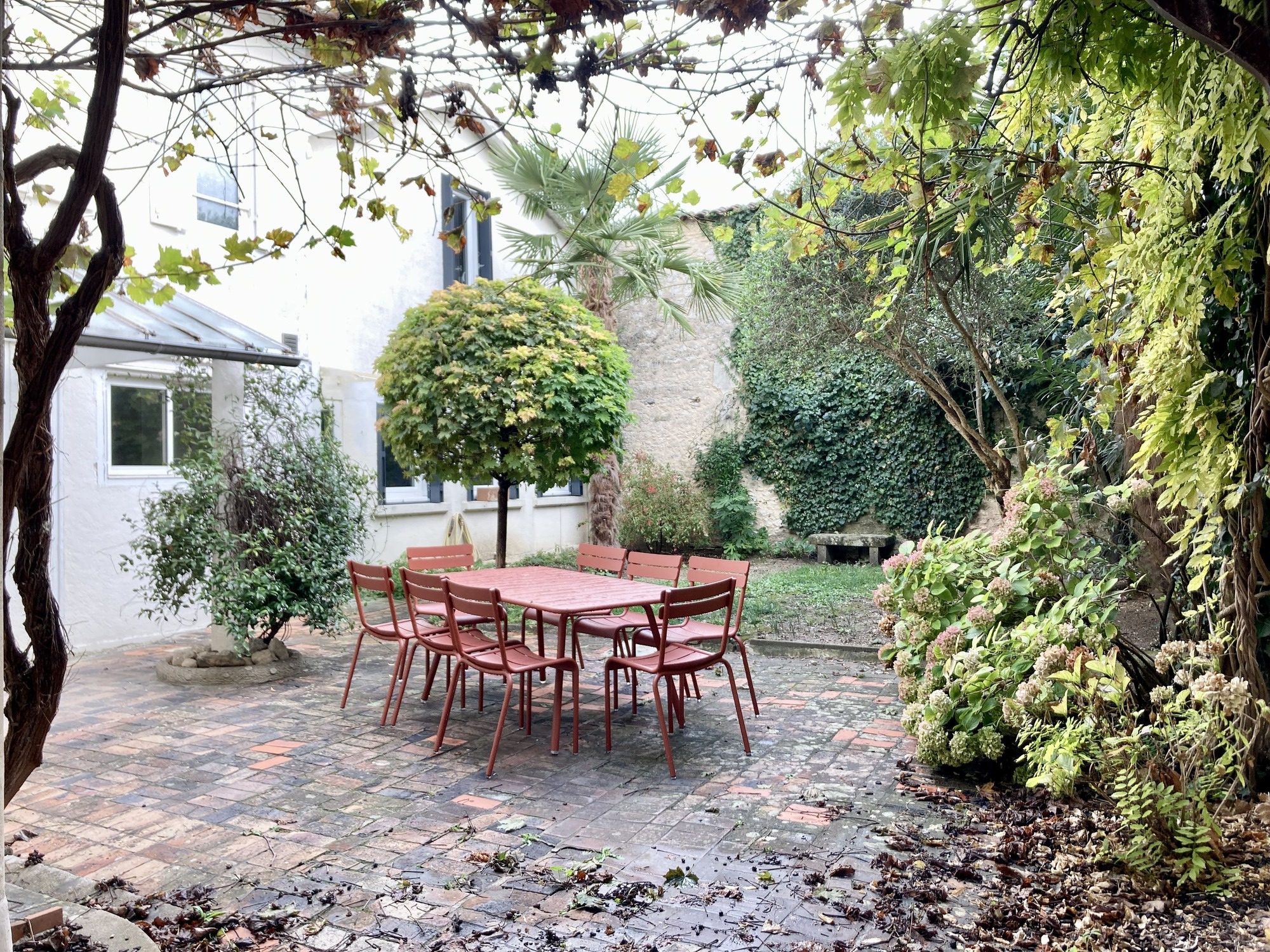
Housing : a private room in a house located 10 minutes on foot from the Foundation, which can accomodate up to four residents at the same time.
Meals: access to the company restaurant at lunch on weekdays (residents are responsible for all other meals)
Transportation: coverage of one round-trip ticket between the resident’s home and the Foundation for each residency period, within the limit of two round trips within France (for a maximum of €500) or one round trip within Europe or internationally (for a maximum of €1,500
Residency fellowship
A weekly stipend of 375€ all atexts included, consisting of:
– maintenance expenses: 175€ per week per person (25€ per day)
– work stipend : 200€ per week of the project
In the case of “production support”, institutional partnerships, the partner insitution is responsible for the work stipend.
Production budget
Within the limit of 2500€, depending on the prject. The production budget covers all expenses for equipment, tools and skills not already present at the Foundation.
Network and resources
– Area professionals and experts
– Acces to the Living Archivean the library
– Use of the Foundation’s vehicle
Communications
– Access to the digital photo studio to document work in progress and the objects produced
– Recording of a professionnal video at the end of the residency that will be posted on social media and made available to résidents
The Foundation also provides support before and after the residency. In addition, the resident is expected to carry out certain actions in order to make the creative process accessible to, and share it with, as many people as possible, such as presenting their project during end-of-residency events.
How to apply
The application must be written in French or English. It must include the following four documents, under penalty of not being reviewed by the selection committee.
Project applications submitted by creators working as a collective are also welcome.
1 – A resume (max. 2 pages)
2 – An artist’s dossier/portfolio that presents the artistic approach and a selection of previous, significant projects (links to websites or an online portfolio are accepted) (max. 20 pages)
3 – A letter of intent including
• the project presentation and its relation to the Foundation’s areas of focus (max. 2 pages).
In certain cases (especially in the field of design), an overview of the current state of research on the subject under consideration is expected. The indicative questionnaire here after is meant to help applications specify their intentions.
• a technical presentation to explain the project’s feasibility to the Foundation that specifies the work process, the technical needs, and workshops to which access is being requested (max. 2 pages)
4 – A project timeline and an estimated production budget covering all technical requirements (equipment, external expertise, tools)
(maximum: €2,500)
Indicative questionnaire
Question 1: How does your project help address a contemporary challenge, be it ecological, social, economic, cultural, or scientific? What kind of transformation (collective, individual, or otherwise) or impact do you hope your project will have?
Question 2: How does a residency at the Martell Corporate Foundation provide an environment that is favourable to the development of your project (i.e., in terms of its resources, workshops, know-how, network, and local area)?
Question 3: How does your project take a particular geographic area into account and explore its specific characteristics and problems?
Question 4: What forms of knowledge, methods, or experiences would you like to share with the general public, professionals, or the local area at the end of your residency?
Submitting the application
The application must :
– be sent only in PDF fomat and as a single file ( max. size 20Mo; you may use file transfer services in case if large files)
– be titled as : First name LAST NAME – Project Title
– be sent no later than 23 August 2026 at 11:59 p.m. to the email address [email protected] awith the subject line « Application for a 2026 residency at the Martell Foundation »
2025 – 2026 Awardees
Tin Ayala, artist-designer (Andes)
Camille Azaïs, writer, art critic (France)
Chloé Azzopardi, photographer (France)
Marlon Bagnou Beido & Soufyane El Koraichi, designers (France)
Daniel A. Barber, architectural and environmental historian, author and educator (the Netherlands)
Robin Bourgeois, designer (France)
Inès Bressand, designer, and Rémi Marilleau, textile artisan (France)
Anne Chaniolleau, dramaturge, and Claire Wallois, artist (France)
Alex Delbos-Gomez, product designer (France)
Frugale Studio, collective: Anna Talec, set designer, and Julie Brugier, designer-researcher (France)
Félixe Kazi-Tani, designer-researcher, and H. Alix Sanyas, artist (France)
Hannes Mayer, architect, artist and author (Germany)
Natacha Mankowski, artist (France)
Vicent Orts, designer (Spain)