


Copyright: FeM
Félixe Kazi-Tani & H·Alix Sanyas
Residency : October – November 2025
Lamentatio
Biography
The work of Félixe Kazi-Tani (research designer* and artist) focuses on minor or marginalized ways of practicing design (queer, trans, at the edges of normative frameworks), leading them to conduct research with transfeminist, anti-capitalist, and ecological activists. Their work explores commensality and hospitality as political forms of life.
H·Alix Sanyas (artist, graphic designer, and filmmaker) works across graphic design, visual arts, filmmaking, and activism to make visible marginalized gender identities and sexualities.
Félixe Kazi-Tani and H·Alix Sanyas joined the Fondation Martell to develop the project Lamentatio.
Research Project at the Fondation Martell
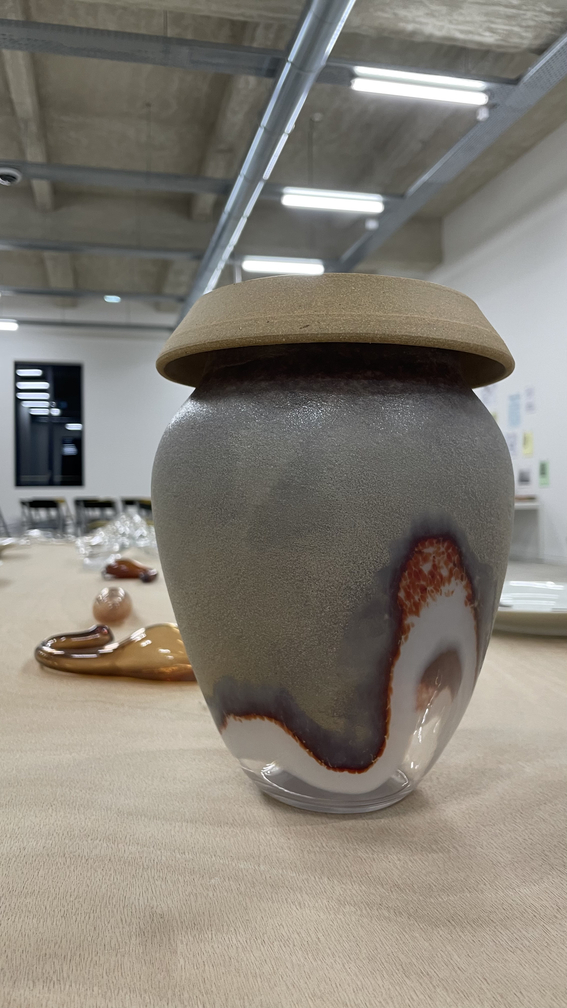
Their work interrogates our ethical, political, and social relationships with non-human beings. They are particularly interested in how food and its associated rituals shape our relationships with the living world, approached from their situated, queer, and feminist perspectives, without seeking resolution or consensus. During the residency, they aim to deepen our understanding of the political, social, and symbolic issues underpinning a food culture that commodifies the life and death of certain bodies. Their research draws on local, traditional objects associated with meat preservation (charnier vessels), alongside ceramic and glass productions of a tableware ensemble influenced by Bernard Palissy (Saintes, 1539–1563) and his followers.
Work-in-Progress Outcomes
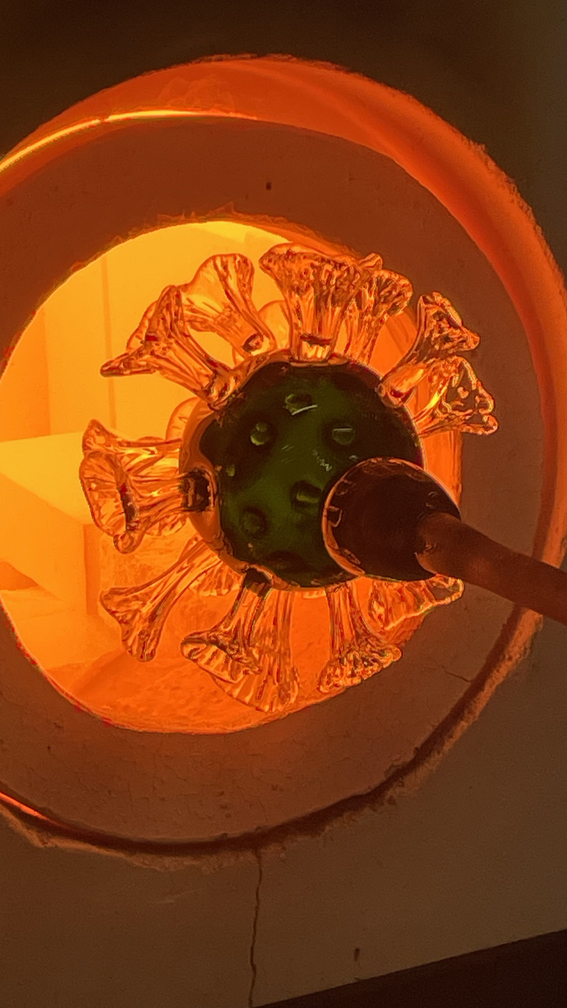
During their residency, the two artists pursue an investigation that moves from a local history of ceramics to a broader history of bodies classified and excluded by society, including reflections on meat production. The use of glassmaking techniques available at the Fondation Martell becomes a medium through which these narratives are articulated.
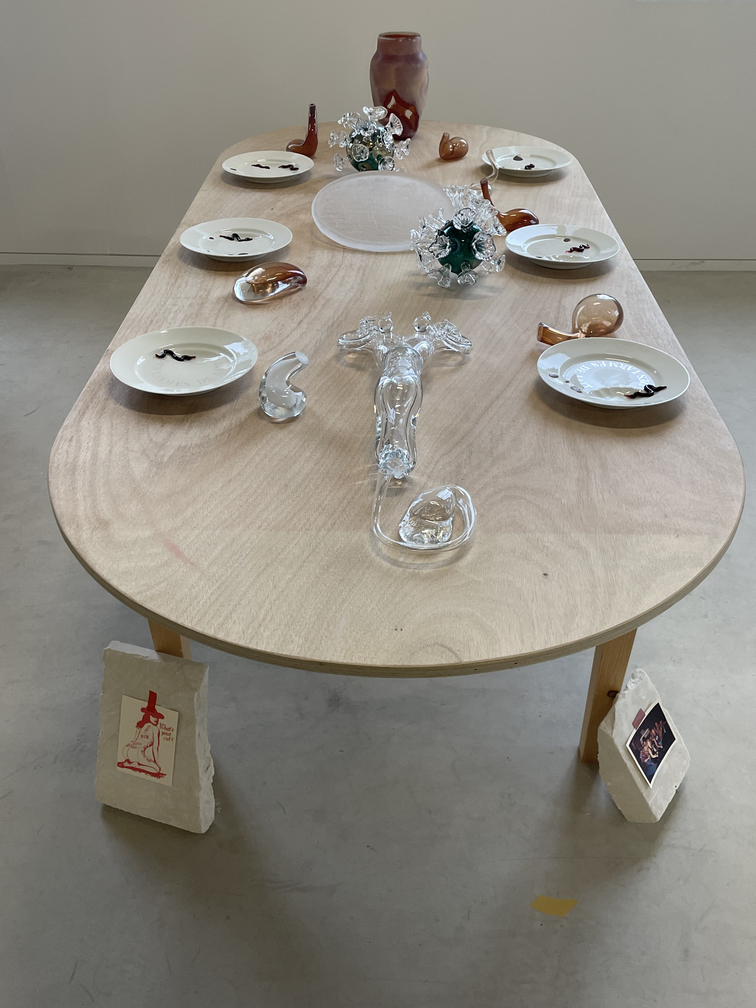
Influenced by the rituals of the table, Lamentatio is conceived as a weaving of counter-narratives, with the charnier — both a vessel used to preserve meat and a site where multiple bodies are accumulated — forming its central knot. These narratives evoke fragmented, devalued bodies reduced to flesh, blood, and secretions; bodies struggling for recognition; and ghostly existences that haunt and compel us.
The charnier sits at the intersection of the respective research of H·Alix Sanyas and Félixe Kazi-Tani: for H·Alix, an exploration of the links between speciesism and sexism, and how gender-based systems of domination shape the control of reproductive functions in female bodies across species; for Félixe, an investigation into collective culinary practices within LGBT communities that enable a rereading of the history of the HIV/AIDS crisis.
The project results in a narrative accompanied by sophisticated glass pieces, including a life-size (interpreted) model of a veterinary gynecological training object and an enlarged virus at the same scale, creating a confrontation of forms, colors, and luminosity.
Position within the Almanach Lab
Influenced by the practices of the table, Lamentatio takes its title from ritual mourning songs as well as from the Book of Jeremiah, in which the prophet reproaches God for participating in the suffering and destruction afflicting the world.
The artists’ work brings together political concerns, social responsibilities, and moral questions through the lens of storytelling—narrative resources rooted in a territory whose past is reactivated by the contemporary artist. In the Charente region, the charnier (a traditional pottery vessel for storing meat) becomes the narrative resource through which questions about our perception of the living are explored. The ecological question calls for a rethinking of all forms of domination—over resources, over non-human life, and over human beings alike.
In this way, the project opens up a different approach to environmental ethics within the Almanach Lab.
Resources Mobilized
• Fondation Martell glass workshop