


Photo credits : Tin Ayala
Tin Ayala
Residency : November – Decembre 2025 and January 2026
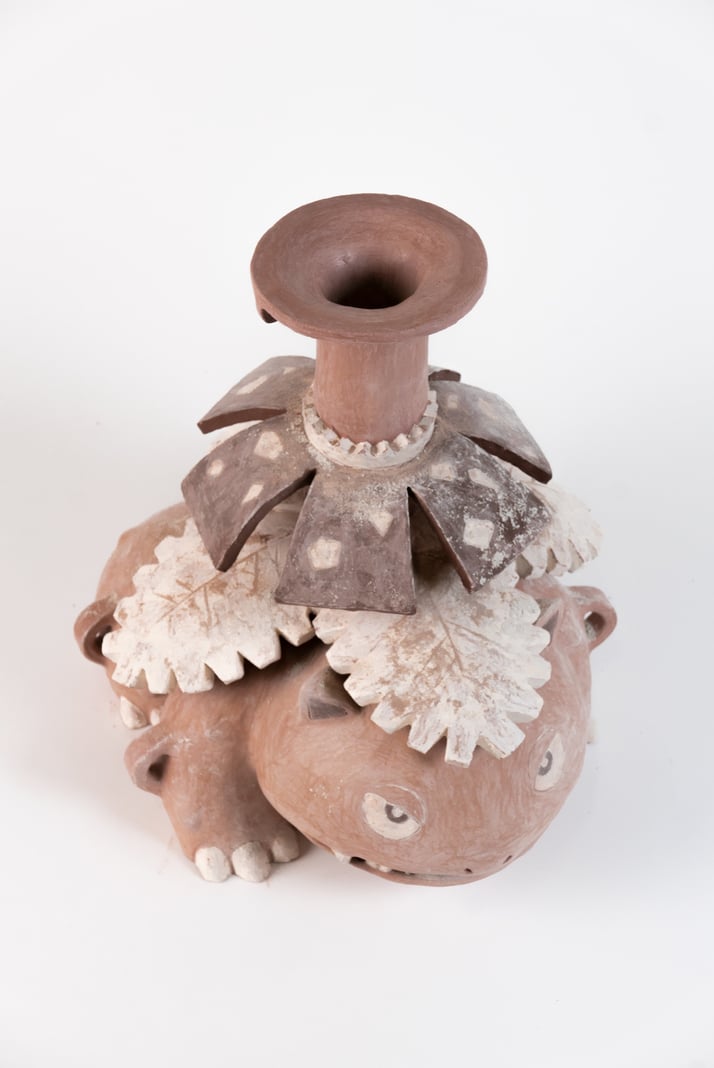
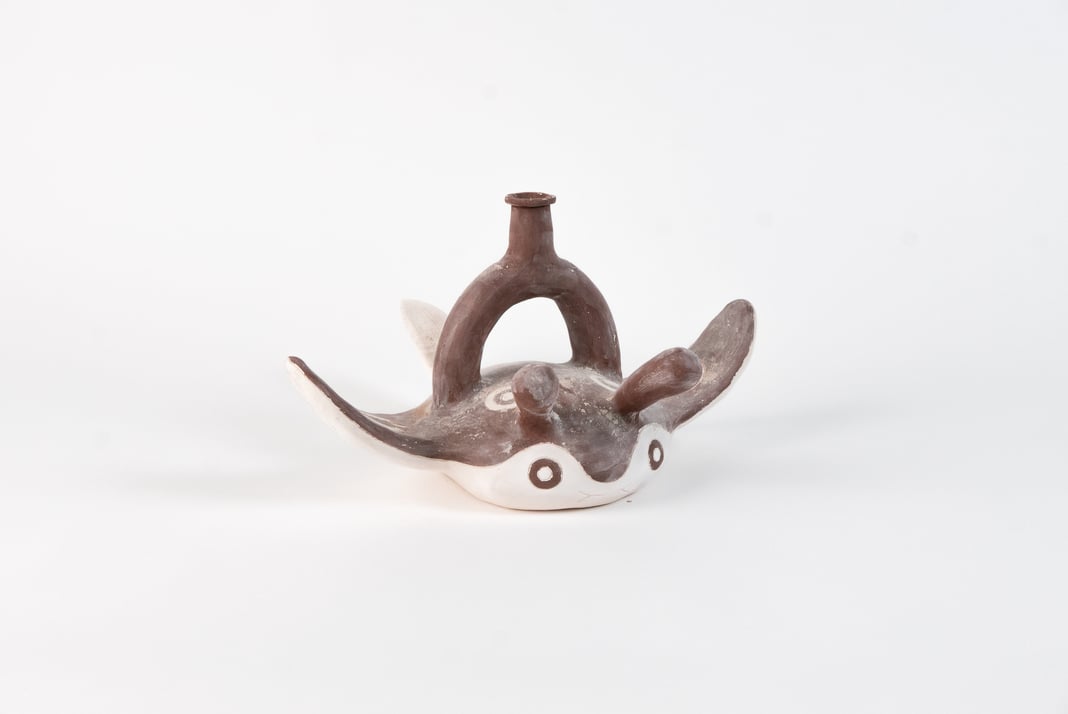
Neo-Huacos
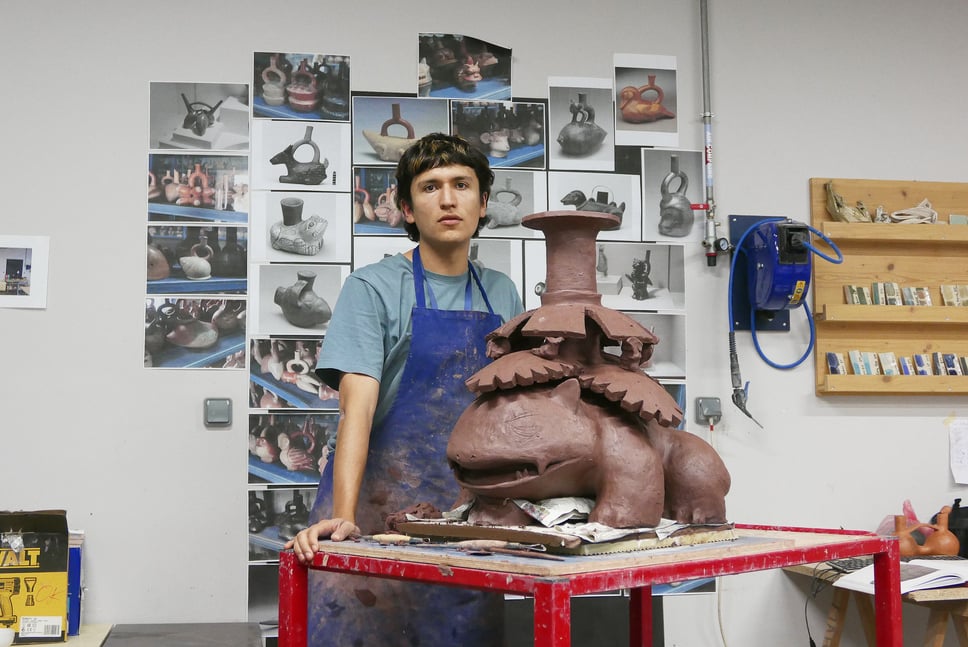
Ecuadorian designer Tin Ayala’s research revolves around pre-Columbian ceramics, envisioned as tools to rethink Western conceptions of ecology.
Western philosophy has historically constructed a binary separation between nature and culture—a distance that enabled control, classification, and exploitation of living beings. This cosmovision developed through observation, measurement, and categorization, transforming nature into a resource.
In contrast, ancestral Andean cosmovisions propose a relationship based on reciprocity and dialogue rather than extraction. Many pre-Columbian Andean societies conceived human beings as part of a web of relationships. In these societies, ceramics were artifacts for connecting with the environment—devices that embodied, activated, and established exchanges with living beings.
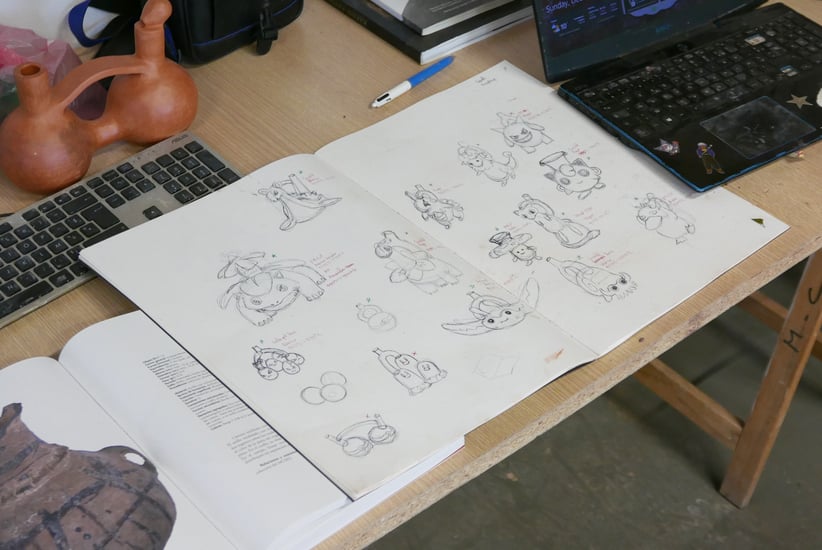
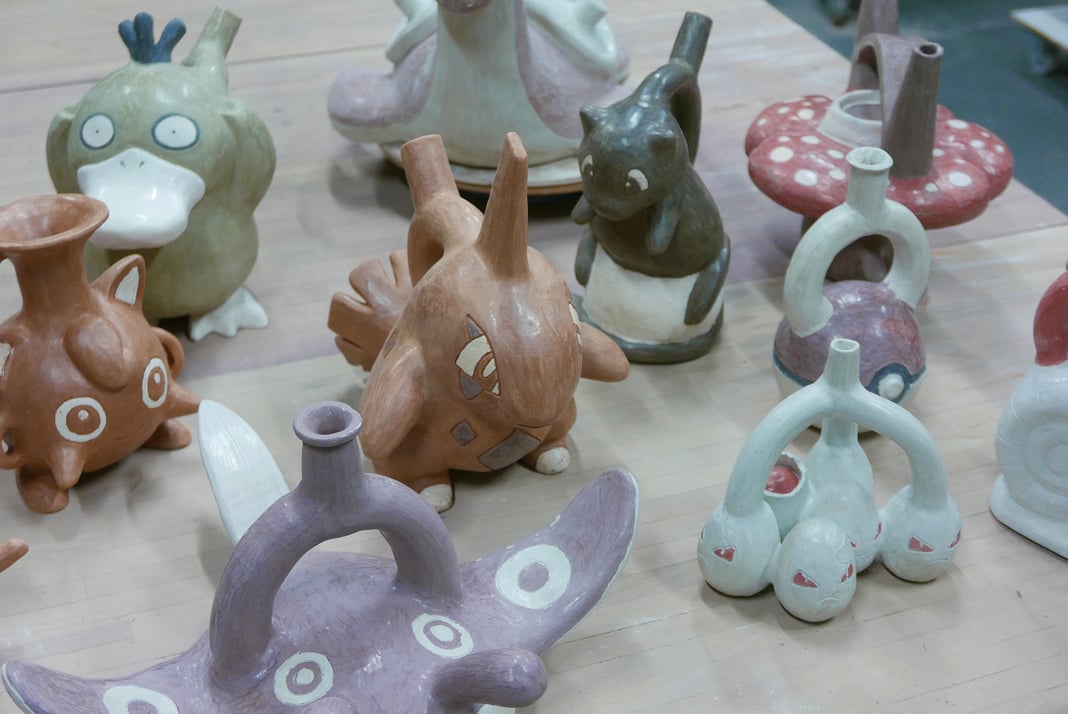
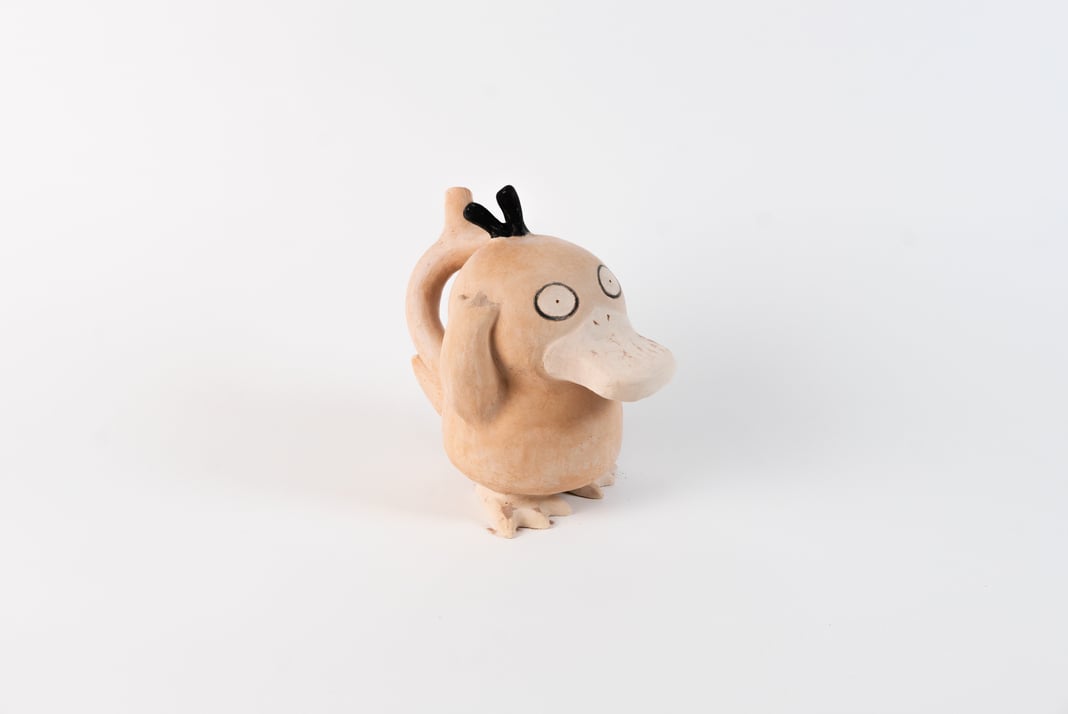
Building on research conducted at the Larco Archaeological Museum in Lima, Tin Ayala reimagines these ceramics as objects capable of existing in the present and extending material traditions interrupted by colonization in the Andes. The goal is not to restore a pre-Columbian past but to imagine a possible continuity.
Tin Ayala uses abigarramiento—the coexistence of seemingly contradictory cultural imperatives within a single object—as a creative methodology. This series of ceramics and glass pieces explores the tensions between Western and Andean ways of representing and relating to life, questioning colonial binaries such as nature/culture, ancestral/contemporary, local/global.